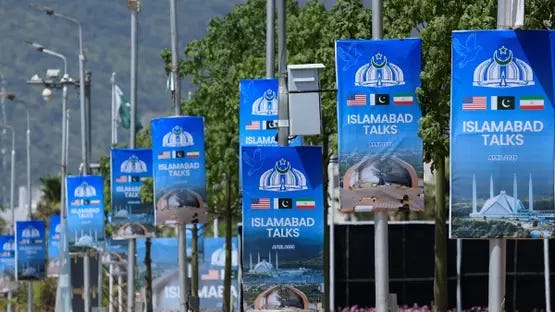
From the perspective of Thomas Schelling (strategic theorist), military power has a diplomatic function only when it is “credible.” This means when you declare a retreat or a temporary ceasefire in the middle of a battle, you reduce the “final cost” for the enemy. In Game Theory, if the enemy feels your will stops at point, they will adjust their strategy based on persistence until point
The result is that any signal of hesitation leads to the “erosion of deterrence” and drives the enemy to the calculation that the pressures are transitory.
2. The War of Narratives and Perception Management
In asymmetric wars, victory is no longer measured by the “number of dead,” but is defined by the “perception of victory.” From the viewpoint of ideological regimes, such as the Islamic Republic, survival means victory. If a larger force (the United States) cannot reach the final goal within a specific timeframe, the smaller force (the regime) creates a narrative of victory simply by “staying alive.” Thus, it is perfectly clear that stopping operations before a complete divestment of power gives the enemy “symbolic capital” to reconstruct its domestic and regional networks.
3. The Paradox of Diplomacy against Revisionist States
In political science, actors are divided into two categories: “Status Quo” and “Revisionist.” Revisionist regimes use diplomacy not to resolve conflict, but as a “delaying tactic” to buy time and realign their forces. In this state, negotiation without crushing military pressure is practically rewarding the aggressor. According to Clausewitz’s formula, war is the continuation of politics; therefore, diplomacy only makes sense when the enemy reaches the conclusion that continuing the war is equal to their absolute destruction.
4. The Principle of “Strategic Decisiveness”
This part of your text which says “If you do not finish the war with victory, it means you have lost,” is a reflection of the Powell Doctrine. The components of this doctrine: use of overwhelming and maximalist force (Decisive Force); having a clear political and military goal; not stopping until the full realization of the goal. Whether in the 12-day war or the 38-day war, a ceasefire in the middle of the way changed the “friction” of the war in favor of the enemy and caused the costs that the United States and Israel have paid so far (capital, lives of soldiers, and political credibility) to go to waste.
Strategic Summary (The Core Thesis)
“In confronting ideological actors, hard power should not be a tool to pull the enemy to the negotiating table, but must be a tool to impose a new reality on the ground; because in this layer of conflict, any vacuum in the exercise of power is immediately filled by the enemy’s narrative of ‘resistance and victory’.”
With a focus on the Balance of Power and an analysis of the current behavior of the United States toward the Islamic Republic, this situation can be examined more deeply from the perspective of “Deterrence Theory” and the “Security Dilemma.” In international relations, when a superpower (USA) faces a regional challenger (Iran), its greatest asset is the “Credibility of Will.” If this credibility is damaged, the cost of maintaining order for the superpower increases exponentially.
📍 Current Situation
1. Deterrence Decay: In strategic theories, deterrence means convincing the enemy that the cost of their action will be much more than its benefit. When the United States gives “proportional” and “limited” responses to the attacks of proxy groups or threats in the Strait of Hormuz, it actually signals to the regime where the “ceiling of tolerance” of the United States is. This causes the Islamic Republic regime, instead of retreating, to continue “testing the boundaries.” According to the Game Theory model, if player A (USA) always retreats or remains silent in the face of a small aggression, player B (the regime) concludes that it can take larger steps without facing a “full-scale war.”
2. Diplomatic Deadlock and Reward for “Misbehavior”: From the perspective of offensive realism, diplomacy in the middle of a battle is often interpreted as a structural weakness. Washington’s current desire for De-escalation through diplomatic channels is seen from Tehran’s perspective not as “political wisdom,” but as “fear of a larger conflict.” This approach has caused the Islamic Republic to use diplomacy as a “human shield” to advance its military and nuclear programs. Until the heavy shadow of hard power is over the negotiating table, the regime will not give any concessions because it sees no reason to change its behavior.
3. Geopolitics of the Strait of Hormuz: A Test of Will or Bargaining? The Strait of Hormuz is a tool of “Strategic Blackmail” for the Islamic Republic, and if the United States allows the control of this waterway to become a tool for the regime’s political point-scoring, it has practically surrendered its hegemony over the world’s energy flow. Classical military theories say when you face an actor that feeds on “disorder,” the only way to establish order is to impose an unbearable cost. Stopping military operations in the middle of the way (for example, to negotiate over the security of shipping) gives the regime the opportunity to reconstruct its mental and physical minefields.
4. The Deadlock of “Limited War”: The strategic mistake in the current Washington is the belief in “tension management.” But in political science, battle with groups whose existential nature is based on conflict is not manageable; rather, only win or loss is relevant. When you avoid final victory (complete change of behavior or change of the threat structure), you practically allow the enemy to manage “time.” In wars of attrition, time is always in favor of the smaller and ideological actor, because they endure human and economic costs more easily than a democracy (USA).
What seems to me these days as a “strategic error” is, in the theory of power, the “mismatch between tool and goal.” The United States has big goals (such as dispossessing the Islamic Republic regime of the Strait of Hormuz or stopping regional influence), but uses small tools (half-baked sanctions or occasional strikes). These “half-baked and long-term/short-term result solutions” cause the regime not only not to be afraid, but to reach the belief that the superpower is in decline. The only way to break this cycle is to move past supplicant diplomacy and replace it with the “logic of dominance”; where military power is used not for threat, but for a definitive change of reality.
In my belief, in the current political structure of the United States, there is a will to exit this “tension management trap,” but political lobbies prevent the implementation of this doctrine of victory. These theatrical assassination attempts on Trump are entirely a warning that: “Trump, let it go!”
In political science, we call this “unfortunately filthy” situation “Conflict of Structure and Agent.” In fact, even if the doctrine of “decisive victory” (which we discussed above) is correct from a military and theoretical point of view, its implementation requires an agent who does not want to or cannot be dissolved in the complex game of Washington lobbies. If we want to examine this issue more explicitly and accurately from the angle of power and the influence of lobbies in the Iran case, there are several key layers:
1. Conflict of interest of “Military-Industrial Complexes” and “Dollar Diplomacy”: In Washington, there is a current known as the Deep State. This management layer does not necessarily seek a “definitive end” to a crisis.
-
Theory of Managed Tension: For many lobbies, the survival of a controlled enemy like the Islamic Republic provides enough justification for arms contracts with regional countries and a permanent military presence.
-
Why Trump? Trump’s view (or any “out of the system” actor), instead of “tension management,” is based on “final settlement” (closing the case). This “closing the case” is an existential threat for the lobbies that benefit from the continuation of the “neither war nor peace” situation. Here, the issue of Iranian stakeholders in Washington is also raised—opposition groups who oppose the Islamic Republic regime but agree with the survival of the Islamic Republic regime, and who also receive a huge financial profit.
2. Influence of “Appeasement Lobbies”: In recent decades, a network of analysts and lobbyists has formed whose professional survival depends on the “continuation of the diplomatic path.” Their approach is to represent any decisive military action to remove the Strait of Hormuz from the regime’s control as the “start of World War III” to frighten politicians. These lobbies give a wrong address; they magnify the cost of “action” so that the much larger cost of “inaction” (meaning the regime becoming nuclear or closing the world’s economic arteries) is not seen.
3. Physical Assassination or Character Assassination; The Obstacle to the Doctrine of Power: “The constant assassination of Trump but the attempt not to kill Trump” refers to a historical-political reality: when a leader wants to break the rules of the established game (Establishment), the system enters the field with all its power (legal, media, and physical) to eliminate him. Trump showed by exiting the JCPOA and eliminating Qasem Soleimani that he is not bound by the rules of “managed tension.” This is exactly the point that puts him against the lobbies that believe one must “deal” with the regime, not “paralyze” it.
4. The Deadlock of Will against Bureaucracy: Even if Trump or someone with a similar view reaches power, they face a massive bureaucracy in the State Department and security agencies that for decades has revolved around “caution” and “maintaining the status quo.” According to Max Weber, bureaucracy can digest and neutralize the will of even the most decisive leaders. Therefore, to realize those goals I mentioned above (final victory and military dispossession), a decisive president alone is not enough; rather, a “structural surgery” in the decision-making body of the United States is necessary.
The current problem of the United States regarding the Islamic Republic is not a lack of “military power,” but rather “dissension in the decision-making center.” The lobbies that benefit from the current shaky stability do not allow the hard power of the United States to be used for “finishing the job.” In fact, the real war is happening in the corridors of power in Washington before it happens in the Strait of Hormuz. Until the status of those lobbies is cleared, any military action might again end in a futile “ceasefire” and an “opportunity for reconstruction” for the regime in the middle of the way.
In my opinion, given this deep influence of lobbies, only and only an “external shock” (like a direct collision at sea) and/or massive street protests of the people like what happened last January will change this entire political game in Washington in favor of a decisive military decision. That is, one must put a hand on the two main triggers that are called “Catalyst Events” in political science. In fact, bureaucratic systems and power lobbies act like an inert body (Inertia) that has no desire to change direction unless a massive external force hits them. These two scenarios I mentioned are exactly the point that shifts the “cost-benefit calculations” in Washington:
1. External Shock: A “Pearl Harbor Moment” in the Persian Gulf: In military strategy, there is a concept called “National Tolerance Threshold.” The lobbies that benefit from appeasement have power as long as the atmosphere is dusty and “neither war nor peace.”
-
Game Changer: A direct collision at sea (for example, the sinking of an aircraft carrier or the complete and physical blockage of the Strait of Hormuz) disarms the Washington lobbies. In such a situation, public opinion and nationalist pressure in the United States force politicians into a “decisive reaction.”
-
Theoretical Result: In this state, “caution” is no longer a political option, but is considered “national treason.” This is the very shock that can replace “tension management” with the doctrine of “final end of the threat.”
2. Massive Internal Protests: Changing the Regime’s Legitimacy: Extensive street protests inside Iran (like what happened in January) change the variable of “regime stability” in Washington’s equations.
-
Breaking the Lobby Logic: Appeasement lobbies always gamble on the idea that “the regime is established and has no alternative, so one must get along with it.” Million-strong and nationwide protests break this prerequisite. This means when the people of Iran show the audacity for change in the street, the “political cost” of supporting or remaining silent toward the regime goes up for the American politician. In this situation, military or logistical support for change becomes an “investment in the future” rather than just an expensive war.
The Link between the Two: “The Perfect Storm”: The most dangerous situation for the survival of the regime and the most difficult moment for the appeasement lobbies is when these two triggers act simultaneously:
-
The regime, to escape the internal crisis (protests), resorts to an external adventure (a naval shock and perhaps a mild nuclear weapon).
-
The United States finds itself in a position where, to maintain its global credibility, it has no way but a final military response.
At this point, that “strategic error” we reviewed at the beginning (hesitation and retreat) will be so scandalous that even the influential lobbies will be forced to retreat to align themselves with the new wave. The result of this discourse is that we must not forget that history has shown that great political developments rarely happen behind a negotiating table; they are usually the result of bloody accidents in the field and the eruption of accumulated anger in the street. From the perspective of realism, power only understands the language of power, and these two shocks are the very language that will wake Washington from its bureaucratic sleep.
And this is now the responsibility of the real opposition of the Islamic Republic. In fact, it must be said we are in a strange Pivot Point; a position that has had no similar instance until now and will be history-making to the extent that it can be cited and spoken of for decades. And that is, with all the points I mentioned, it is possible “even tonight” for a few dozen protesting youths in the streets of Tehran to disrupt all the balances of global power centers by morning, because it is clear the regime no longer has the power of suppression it once had.
We are at a historical pivot point. The word “Pivot Point” is the best description for the current situation. In the physics of politics, when a system reaches a critical point (Criticality), the smallest strike in the right place and time creates an effect that is not proportional to the volume of the strike. This is the “Butterfly Effect” in strategic developments. My analysis of the suppression power and the global balance can be formulated from several final perspectives:
1. Strategic Exhaustion of the Suppression Machine: Regimes need three factors for suppression: money, loyal personnel, and will. Based on dozens of field evidence, I believe money is facing a severe shortage, loyal personnel have drastically decreased, and the will has also gone down sharply, similar to the final months of Bashar al-Assad’s power where exhaustion could be seen in him as well. Now it must be added that in the Islamic Republic, it is currently not clear at all whether a leadership even exists or not!
So when protests pass a certain threshold (Tipping Point), the suppression machine suffers a “structural exhaustion.” The suppressor force, when it sees that global support for the regime is cut off and it faces a population in the street that has left “fear” behind, suffers defection. If those “few dozen youths” I mentioned take control of a symbolic area—for example, the “Islamic Consultative Assembly” (Majlis) or an IRGC barracks—for just a few hours, meaning from night until the morning of the same day, the image of the regime’s “invincibility” in the narrative battle collapses. This moment is exactly where the Washington lobbies can no longer sell the claim of “regime stability.”
2. Disruption of Global Power Centers’ Calculations: Global power centers (including governments and economic cartels) act based on “predictability,” and the Islamic Republic has for years imposed itself as an evil that must be tolerated by selling “organized disorder.” This is where the spark of the Tehran street makes these calculations “unpredictable.” When the cost of maintaining the regime (due to absolute instability) becomes more than the cost of its fall, the power centers quickly change direction to have a share in the “future order.” This is where “appeasement diplomacy” gives its place to “power transition diplomacy.”
3. Historical Responsibility of the Opposition: Transition from “Destruction” to “Establishment”: As I mentioned, at this pivot point, the duty of the field is with the youth, but the duty of “registering the victory” is with the opposition.
-
The Power Trap: If the opposition cannot provide a coherent Alternative in that “night-to-morning decisive time,” global powers, out of fear of a Power Vacuum, might again lean toward reactionary options or maintaining the existing structures half-way.
-
War of Narratives: The opposition must be able to prove to the world that the fall of the regime is not the start of chaos, but the start of a “New Stability” in the heart of the Middle East and energy security (Strait of Hormuz).
Conclusion: The dynamics of politics tell us that totalitarian regimes always seem “very strong” until exactly one moment before they become “very weak” and collapse. Those few dozen youths in the street of Tehran are not just fighting with their bodies; they are nullifying the “credibility of power” of the regime in the minds of Pentagon and White House analysts. If the street proves that the regime no longer has the “function of control,” all the billion-dollar lobbies will join history in half a day. In fact, the “will of the street” is the very variable that changes diplomacy from a supplicant state to an aggressive state and pulls armies out of their scabbards for the final strike.
To further enrich this text and for the final summary within the analytical framework, I add a few key points as supplementary layers:
1. The Theory of “Showing Strength” vs. “Hollow Reality”: Totalitarian regimes suffer from what Timur Kuran (political theorist) calls “Preference Falsification.” The regime pretends to have absolute power until the last moment, but because it has lost its social base, it is like a concrete structure that has suffered corrosion from the inside. Your analysis: Your reference to the control of a barracks or a symbolic center by a few dozen youths is exactly the point that breaks the “illusion of power” of the regime and shows the world that the king is naked.
2. Paradigm Shift from “Containment” to “Change”: In Washington, lobbies always invest in “Containment” because containment is an eternal and profitable process. But “Change” is an end to their billion-dollar projects. The role of the catalyst: the external shock or the street eruption you mentioned makes the cost of “containment” for the United States exceed the cost of “change.” At that moment, the U.S. bureaucracy, for its own survival, will sacrifice the appeasement lobbies.
3. New Geometry of Security in the Persian Gulf: Your emphasis on the Strait of Hormuz and energy security is the beating heart of political realism. If the opposition can replace the narrative of “after-fall chaos” with the narrative of “New Stability,” it is actually providing a “Strategic Guarantee” to global powers. This guarantee eliminates the fear of a power vacuum.
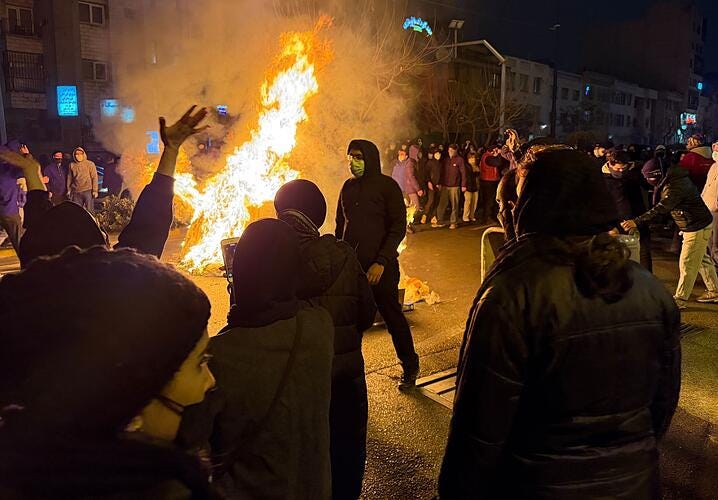
Strategic Pivot of Will: Why do a few dozen youths in Tehran change global balances?
The Core Statement: Victory in the battle with the Islamic Republic lies not in diplomatic corridors, but in reclaiming the “Credibility of Will.” When the will of the street is linked with the will of hard power, the Washington lobbies and the Tehran suppression machine will simultaneously join history.
To not get lost among political concepts:
📍 Trigger One (External): Shock in the Strait of Hormuz $\leftarrow$ End of the credibility of Washington lobbies.
📍 Trigger Two (Internal): Seizing symbols of power in Tehran $\leftarrow$ Psychological collapse of the suppression machine.
Output: Transition from “managed tension” to “establishment of a new order.”
To explain this “coherent alternative” and pass through the trap of the power vacuum, the opposition must change its nature from a “protest group” to a “Government-in-waiting.” In fact, for those few dozen youths in Tehran to be able to change global balances by morning, there must be a “ready package” that global power centers can immediately rely on. This responsibility can be formulated in three strategic steps:
1. Providing a “Stability Roadmap”: The world is afraid of change, not out of sympathy for the regime, but out of fear of the insecurity of economic arteries.
-
Guaranteeing Energy Security: The opposition must officially and transparently announce that immediately after the fall of the regime, the security of shipping in the Strait of Hormuz and the stable flow of energy will be guaranteed. This message removes the oil lobbies and large cartels from the ranks of the “status quo” supporters.
-
Managing the Transition Period: Designing a temporary body whose duty is purely the transition of power (not necessarily long-term governance), to prevent the collapse of public services and administrative chaos.
2. Influencing the “Cracks of the Suppression Machine”: The opposition must not only face the people; it must speak directly to the gray body of the armed forces (the Army and even the non-ideological parts of the IRGC).
-
Promise of Amnesty and Integration: Creating an “Exit Ramp” for those whose hands are not stained with blood. If the military body knows it has a place for a normal life in the future system, it will not pull the trigger against the people in that “decisive half-day.”
-
Nullifying the Will to Suppress: When the opposition talks about a “New Order” instead of “absolute destruction,” the lower layers of suppression suffer a calculative doubt.
3. Aggressive Diplomacy: Replacing Credibility: Instead of asking the West for “help,” the opposition must impose itself as a “Responsible Partner of the Future.”
-
Disarming the Appeasement Lobby: The opposition must show with accurate data that the cost of the regime’s “survival” (through terrorism, becoming nuclear, and mass migration) is much more for the world than the cost of its “fall.”
-
Alliance with Power Centers: Establishing a link with parts of the U.S. political system that seek a “Doctrine of Victory” (like the Trump current), so that at the moment of the “catalyst shock,” there is a complete overlap between external military action and internal street movement.
Final Result: Those few dozen youths are the “driving force,” but the opposition must be the “steering wheel” of this machine. If there is no steering wheel, global powers, out of fear of an accident, will pull the brake of the machine (the people’s movement). In fact, victory becomes definitive when in the mind of a politician in Washington or London, the image of “Iran after the Islamic Republic” is drawn not as a black hole, but as a “Great Economic and Security Opportunity.” This is the very structural surgery I have talked and written about for years: the link of “Street Courage” with “Strategic Rationality” and “Connection with the heads of suppression and the defectors.”
Link in X